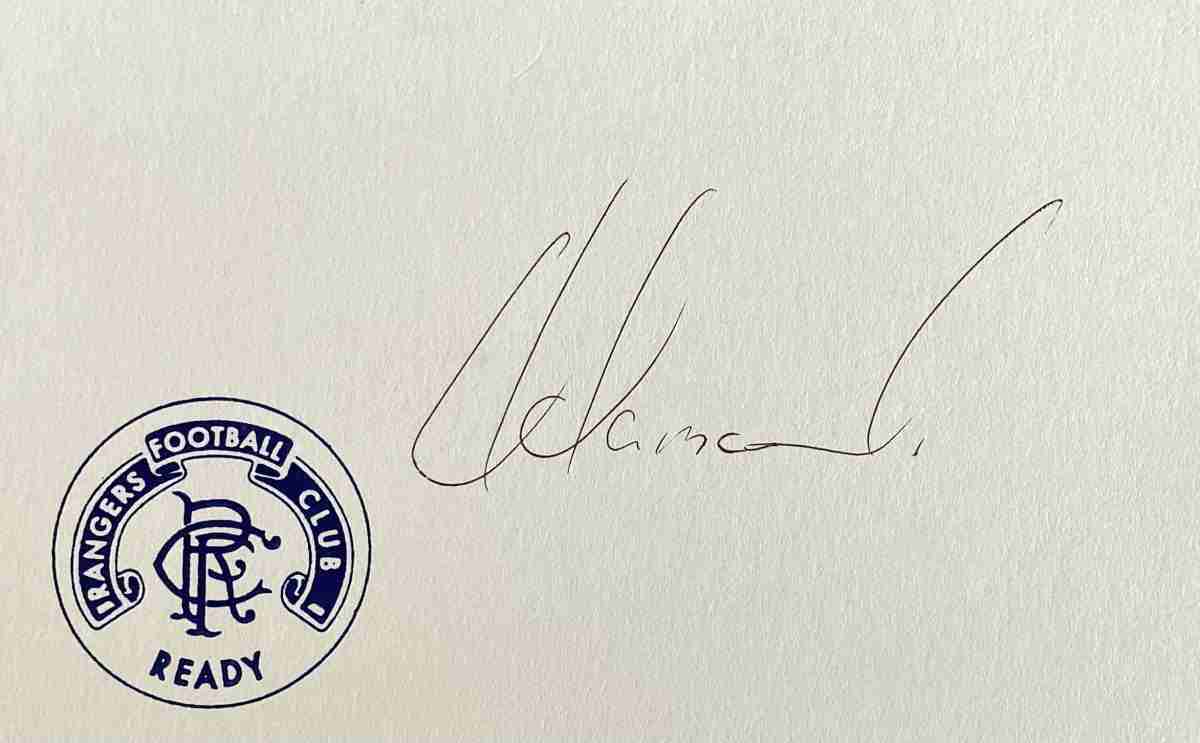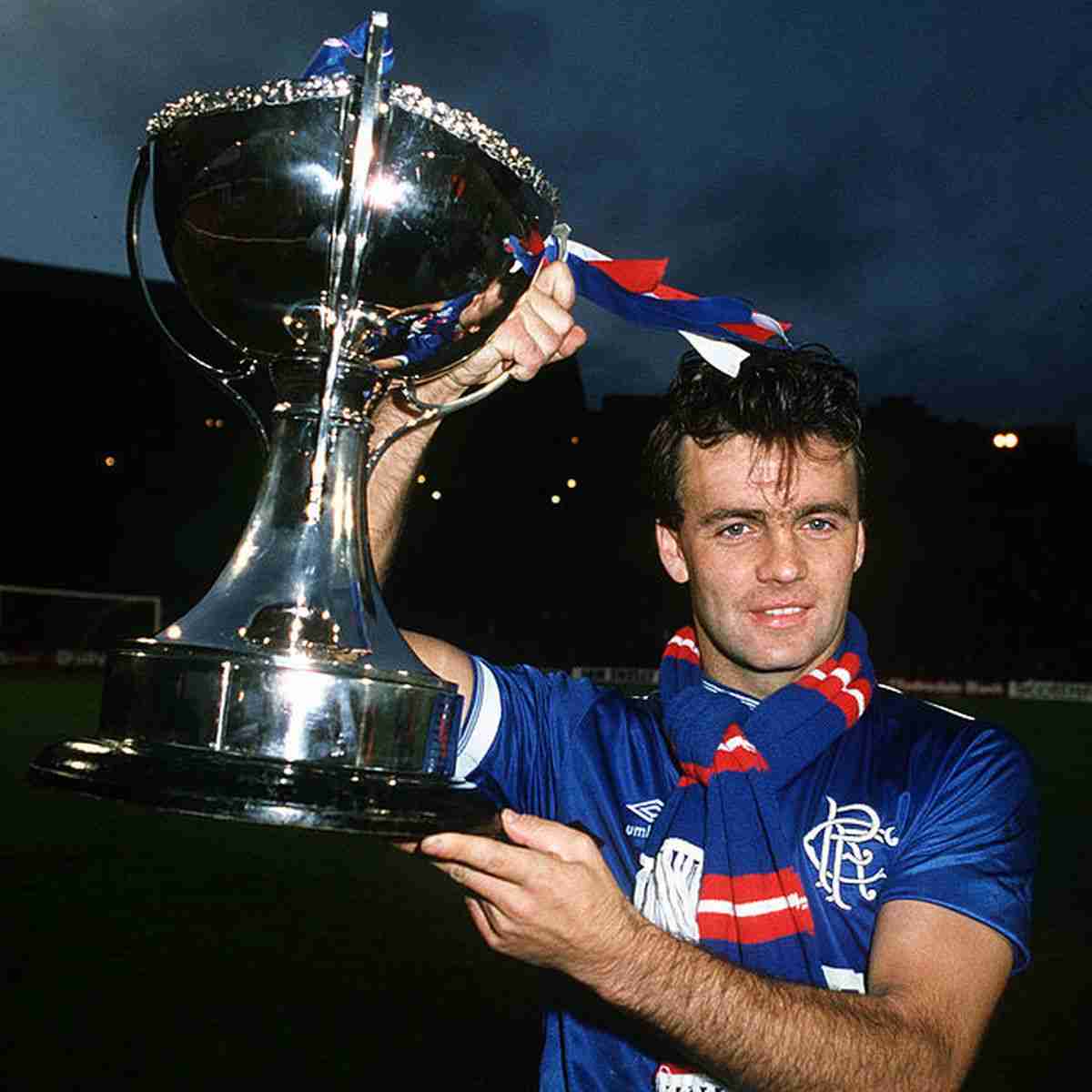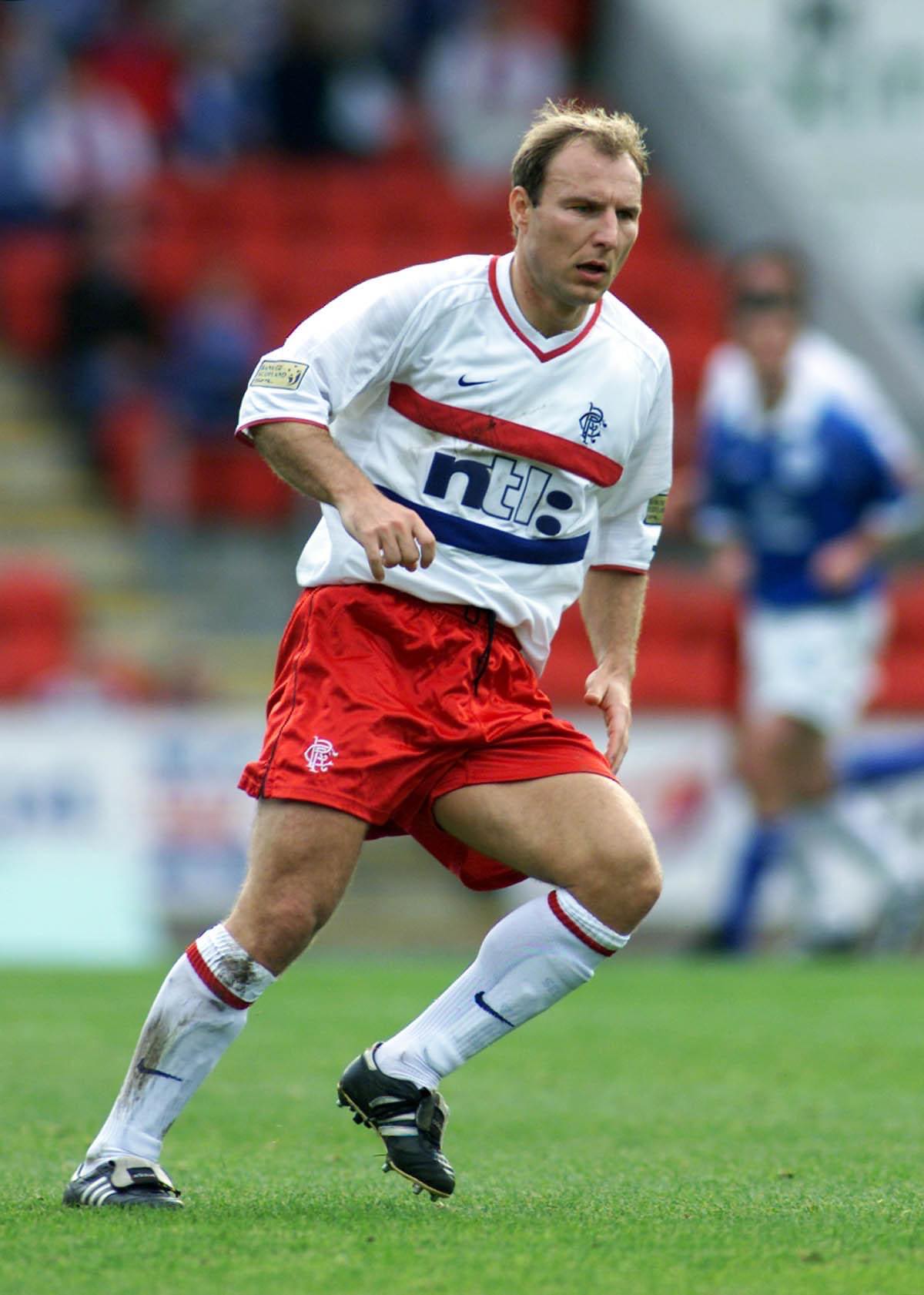

Dariusz Adamczuk (1999 to 2002)
Dariusz was the first Polish footballer to play for Rangers, signing in 1999 on a Bosman deal from Dundee amid interest from Old Firm rivals Celtic. To date, Mateusz Żukowski is the only other player from that country to have represented the club.
The midfielder had enjoyed two separate spells on Tayside during the 1990s, initially signing from Eintracht Frankfurt for a fee of £250,000. Although his first spell was brief, his performances earned him a move to Italy, with Udinese doubling that initial outlay. Within a matter of months, Dariusz had become both Dundee’s record purchase and record sale.
Returning to Scotland later that decade, he helped Dundee secure promotion back to the top flight and was named the club’s Player of the Year in their first season back in the Premier League. His impact at Dens Park was later recognised with his induction into the Dundee Hall of Fame in 2021.
With the Polish internationalist out of contract at the end of the 1998/99 season and therefore available on a free transfer, it was unsurprising that there was genuine interest from several clubs, including both sides of the Old Firm. Although Adamczuk’s preferred position was midfield, he could also operate at right full-back, offering valuable versatility as Rangers prepared for qualification in the European Champions League in 1999.
Adamczuk made his Rangers debut in a Champions League qualifier, starting at full-back as the 29-year-old helped Rangers to a comfortable 4–0 victory over FC Haka in Finland. With a midfield containing Barry Ferguson, Claudio Reyna and Giovanni van Bronckhorst, it was clear that Dariusz faced stiff competition for opportunities in his favoured role. Even fan favourite Jorge Albertz was limited to a brief ten-minute cameo in that match, underlining the depth of quality in Rangers’ midfield.
The season began positively for Rangers, with Dariusz involved in the majority of matches, albeit often as a substitute. A memorable 2–0 win over Parma at Ibrox, in which he did not feature, put the club in a strong position to secure group-stage qualification ahead of the return leg in Italy. For that match, Dick Advocaat opted for Adamczuk’s hard working and defensive qualities, selecting him in his preferred midfield role. Rangers dug deep, narrowly losing by a single goal but securing qualification against the star studded Serie A side.
Despite being drawn in what was widely regarded as the toughest group—alongside Bayern Munich, Valencia and PSV Eindhoven—Rangers were unfortunate not to progress to the knockout rounds. Adamczuk, however, found himself watching much of Europe’s elite competition from the sidelines. Domestically, though, Advocaat’s rotation policy ensured he continued to feature with some regularity.
Following Rangers’ drop into the UEFA Cup, the draw again proved unforgiving. Adamczuk started as Borussia Dortmund were defeated 2–0 at Ibrox, only for the Germans to replicate that scoreline in Dortmund. Rangers were eventually eliminated after extra time and penalties, a match that would prove to be Adamczuk’s final appearance of his debut season. He made 16 appearances in total, five of which came from the substitutes’ bench. Although Rangers completed a League and Scottish Cup double, Dariusz was largely on the periphery by the time the silverware was presented.
The player struggled with injuries and the lack of a sustained run in the team. Less technically gifted than some of his midfield peers at Ibrox, regular football was crucial to maintaining both confidence and fitness. Unfortunately, despite a relatively assured start, that continuity never materialised.
The signing of Fernando Ricksen in the summer of 2000 further reduced opportunities at full-back. Although the Dutchman endured a difficult start to his own Rangers career, this did little to benefit Adamczuk, who was limited to just three appearances during the autumn of 2000. With the first two ending in defeat, circumstances were far from ideal. However, a substitute appearance in a 2–1 victory over Aberdeen at Pittodrie ensured his Rangers career concluded on a winning note.
A brief loan spell with English side Wigan Athletic followed during the 2001/02 season, by which time it was clear that he was no longer part of the plans at Ibrox.
His relationship with the increasingly pressured Advocaat, like that of several others, became strained. The Dutchman was notoriously distant from his players, particularly those outside his immediate plans. Gradually, Dariusz came to feel like a forgotten figure at Ibrox and was eventually diagnosed with depression, rendering him unavailable for selection. Inevitably, sections of the Rangers support viewed this development with scepticism. At just 31 years of age, he chose to retire at the end of his Scottish chapter and return to his homeland.
Dariusz later joined Pogoń Szczecin, where he became sporting director and oversaw the club’s rise from the fourth tier of Polish football to the Ekstraklasa, the country’s top division.
by Rick Plews